Md. Wahidur Rahman

Ph.D. Student in Electrical Engineering and Computer Science

Texas A&M University–Kingsville Student Member, IEEE

Research at the intersection of artificial intelligence and cybersecurity — intrusion detection, cross-platform malware analysis, privacy-preserving learning and intelligent healthcare.

FocusFocus areas: Cybersecurity, Intrusion Detection, Cross-Platform Malware Analysis, Federated Learning, Privacy-Preserving AI, Explainable AI, Medical AI, Computer Vision

Currently researchingFedQDFU: Non-IID Federated Quantum Learning for Diabetic Foot Ulcer Classification from Deep Image Features
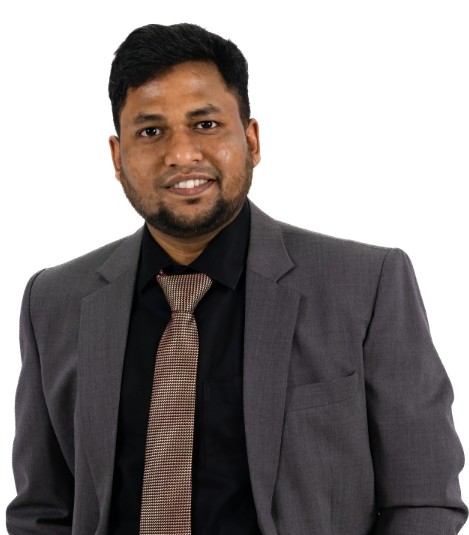
Portrait of Md. Wahidur Rahman

Research Impact

All publications →
Total Publications
54
Journal Articles
38
Conference Papers
13
Book Chapters
3
Research Areas
11
Students Supervised
1
Citations
1,546
h-index
19
i10-index
29
Publications per year2019–2026
Publications per year 2019: 1, 2020: 2, 2021: 2, 2022: 11, 2023: 7, 2024: 15, 2025: 10, 2026: 6 0 5 10 15 2019: 1 publications 1 2019 2020: 2 publications 2 2020 2021: 2 publications 2 2021 2022: 11 publications 11 2022 2023: 7 publications 7 2023 2024: 15 publications 15 2024 2025: 10 publications 10 2025 2026: 6 publications 6 2026
By publication type
Journal articles: 38, Conference papers: 13, Book chapters: 3 Journal articles: 38 Conference papers: 13 Book chapters: 3 54 PUBLICATIONS
  • Journal articles3870%
  • Conference papers1324%
  • Book chapters36%
Citations per year (Google Scholar)2022–2025
Citations per year (Google Scholar) 2022: 124, 2023: 209, 2024: 340, 2025: 452 0 100 200 300 400 500 2022: 124 citations 124 2022 2023: 209 citations 209 2023 2024: 340 citations 340 2024 2025: 452 citations 452 2025

Publication counts and charts are generated from the bibliography on this site. Citation metrics entered manually from Google Scholar · Last updated September 23, 2026.

Research Themes

Research overview →

Cybersecurity

Protecting systems, networks and data from attacks, intrusion and misuse.

Intrusion Detection

Identifying malicious activity in network traffic and system behaviour.

Cross-Platform Malware Analysis

Detecting and characterising malicious software across Windows and Android.

Federated Learning

Training models collaboratively without centralising raw data.

Privacy-Preserving AI

Machine learning that limits the exposure of sensitive or personal data.

Explainable AI

Making model decisions transparent and interpretable to people.

View all publications →
  1. Journal 2026

    Bacterial Foraging Optimization-boosted convolutional neural network for brain tumor detection using MRI images

    Md Tarequl Islam, Md Wahidur Rahman, Kaniz Roksana, Md Shakhawat Hossain, Mostofa Kamal Nasir, Angel Rio-Alvarez, Victor M Gonzalez

    Journal of Computational Science, vol. 99, Art. no. 102918

  2. Journal 2026

    Privacy-Preserving Cascaded Federated Deep Learning for Nomophobia Risk Prediction with Encrypted Masked Updates

    Md Wahidur Rahman, Rahat Khan, Mais Nijim, Waseem Al Aqqad, Yoichi Tomioka, Jungpil Shin, Mehdi Hasan

    Electronics, vol. 15, no. 11, Art. no. 2431

  3. Conference 2026

    GXMalDetect: A Hybrid GA--XGBoost Architecture for Malware Detection Using Static Image Features

    Abdul Kareem Uddin Mohd, Md Habibur Rahman, Md Wahidur Rahman, Avdesh Mishra, Tarek Mahmud, Maleq Khan

    2026 IEEE 5th International Conference on AI in Cybersecurity (ICAIC), pp. 1–6

  4. Conference 2026

    TabNet-IDS: A TabNet-Driven Tabular Deep Learning Framework for Intrusion Detection Systems

    Md Habibur Rahman, Md Wahidur Rahman, Avdesh Mishra, Tarek Mahmud, Mais Nijim

    2026 IEEE 5th International Conference on AI in Cybersecurity (ICAIC), pp. 1–6

  5. Conference 2026

    Privacy-Preserving Federated Deep Learning for Nomophobia Risk Prediction From Smartphone Usage Logs

    Md Wahidur Rahman, Mehdi Hasan, Mais Nijim, Muhammad Armughan Ul Haq, Fawaz Ali Mohammed

    2026 IEEE 5th International Conference on AI in Cybersecurity (ICAIC), pp. 1–6